
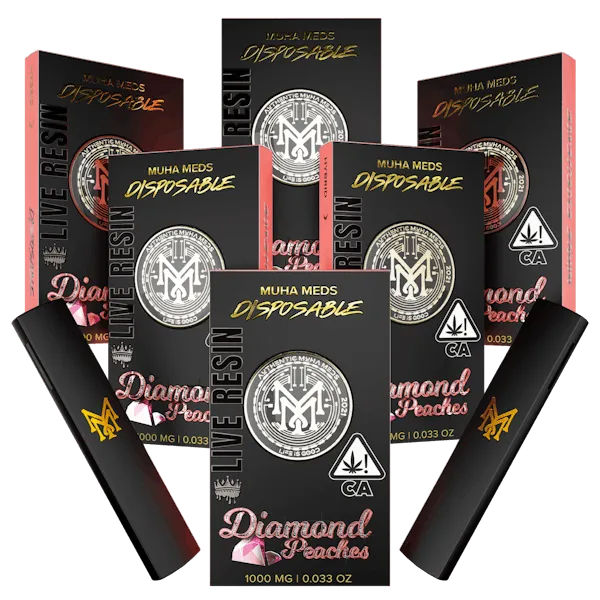
When comparing cannabis concentrates, two terms that frequently appear are muha meds, live resin and distillate. Although both can contain high concentrations of cannabinoids such as THC, they are produced differently and can have noticeably different chemical profiles.
Understanding the difference between live resin vs. distillate can help consumers better understand cannabis product labels and the terminology used throughout the cannabis industry. Brands such as Muha Meds may use different concentrate technologies and formulations across their product lines, making it useful to understand the underlying terminology rather than assuming every cannabis extract is the same.
What Is Live Resin?
Live resin is a cannabis concentrate made using cannabis plants that are typically harvested and frozen soon after harvest. Freezing helps preserve volatile compounds, particularly terpenes, that can be lost during traditional drying and curing.
The extraction process then separates desirable compounds from the plant material while attempting to retain a broader portion of the plant’s original aromatic profile.
Because of this approach, live resin is generally associated with:
- Higher terpene preservation
- Stronger natural cannabis aromas
- More complex flavor profiles
- A broader range of naturally occurring cannabis compounds
The exact composition depends on the cultivar, extraction method, processing conditions, and laboratory results.
What Is Distillate?
Cannabis distillate is produced through additional refinement. Extraction is followed by purification and distillation designed to isolate specific cannabinoids, most commonly THC.
This additional processing can produce a highly concentrated and relatively consistent cannabinoid product. Compared with live resin, distillate generally contains fewer naturally occurring terpenes unless terpenes or other compounds are added later.
Common characteristics of THC distillate include:
- High cannabinoid concentration
- Consistent formulation
- Relatively neutral aroma and flavor
- Extensive refinement
- Ability to be formulated into different cannabis products
Distillate should not automatically be considered “better” or “worse” than live resin. They are simply different types of cannabis extracts with different production goals.
Live Resin vs. Distillate: Key Differences
The biggest distinction between live resin and distillate is the approach used during processing.
| Feature | Live Resin | Distillate |
|---|---|---|
| Starting material | Typically freshly harvested and frozen cannabis | Cannabis extract that undergoes extensive refinement |
| Terpenes | Generally retains more native terpenes | Typically contains fewer native terpenes |
| Processing | Designed to preserve a broader chemical profile | Designed to refine and isolate cannabinoids |
| Flavor | Often more pronounced and cultivar-specific | Often more neutral unless flavor compounds are added |
| Consistency | Can vary by strain and batch | Often highly standardized |
| Primary emphasis | Terpene and compound preservation | Cannabinoid refinement |
Why Do Terpenes Matter?
Terpenes are aromatic compounds found in cannabis and many other plants. They contribute significantly to aroma and flavor and may influence the overall sensory characteristics of a cannabis extract.
Live resin is particularly associated with terpene preservation because its production begins with freshly harvested material that is frozen rather than conventionally dried and cured.
This is one reason searches for “live resin vs distillate” often focus on flavor and terpene content.
However, terpene content alone does not determine the quality or safety of a cannabis product. Independent laboratory testing, manufacturing standards, accurate labeling, and legal compliance are also important considerations.
Where Does Muha Meds Fit In?
Muha Meds is a cannabis brand associated with a range of vape and concentrate products. When evaluating any branded cannabis product, it is important to look beyond the brand name and examine the specific product’s ingredients, cannabinoid content, terpene information, manufacturing details, and available laboratory testing.
A product described as “live resin” should not automatically be assumed to have the same chemical profile as every other live resin product. Extraction techniques and formulations can differ substantially between manufacturers.
Likewise, products containing distillate can vary depending on whether additional terpenes or flavor compounds have been incorporated after refinement.
Live Resin vs. Distillate Effects
People sometimes search for “live resin vs distillate effects”, but effects cannot be predicted solely from the extraction category.
The experience associated with a cannabis product can depend on numerous factors, including cannabinoid concentrations, terpene composition, individual physiology, tolerance, consumption method, and the amount consumed.
Therefore, it is more accurate to evaluate the specific product’s laboratory information rather than assuming that every live resin or distillate product produces the same experience.
Which Is More Refined?
Distillate generally undergoes more extensive purification than live resin. Its purpose is to create a refined cannabinoid concentrate with a relatively standardized composition.
Live resin takes a different approach. Instead of maximizing cannabinoid isolation, the extraction process is designed to preserve more of the compounds associated with the original plant material.
This means the word “refined” does not necessarily mean “better.” It describes the degree and purpose of processing.
How to Read Cannabis Product Labels
Regardless of whether a product contains live resin or distillate, consumers should examine the available product information carefully.
Look for:
- THC and other cannabinoid concentrations
- Ingredient lists
- Terpene information
- Batch or lot information
- Laboratory testing
- Manufacturer information
- Applicable regulatory information
- Appropriate age and legal-use requirements
Third-party laboratory testing can provide useful information about cannabinoid concentrations and, where applicable, contaminants.