
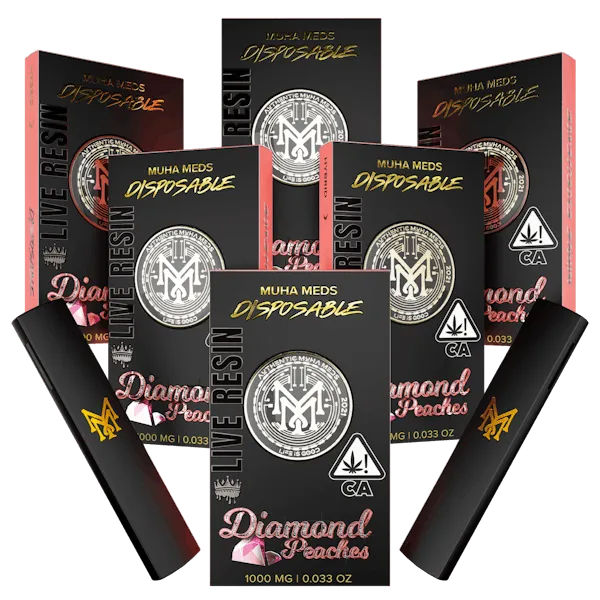
When choosing between a Muha Meds disposable and a Muha Meds cartridge, the biggest difference is the hardware and how the product is designed to be used. Both formats are commonly associated with cannabis vape products, but they offer different experiences when it comes to convenience, portability, batteries, and reuse.
Understanding the differences between a Muha Meds disposable vs. cartridge can help consumers make a more informed decision based on their preferences and local regulations.
In this guide, we’ll compare Muha Meds disposables and cartridges, explain how each format works, and highlight the factors worth considering before choosing one.
What Is a Muha Meds Disposable?
A Muha Meds disposable is a self-contained vaping device. The vape hardware and cannabis oil are packaged together in a single unit, meaning the device is designed to be used without a separate battery.
The main attraction of disposable vape hardware is simplicity. There is generally no need to purchase a compatible battery or attach a cartridge before use. Once the device is depleted, the hardware is typically discarded according to applicable local disposal requirements.
For consumers who prioritize portability and straightforward hardware, the disposable format can be convenient.
Key Features of a Disposable
- Self-contained vape device
- Integrated battery
- No separate 510 battery required
- Compact and portable design
- Designed as a single-use hardware format
- Minimal setup compared with cartridge systems
What Is a Muha Meds Cartridge?
A Muha Meds cartridge is a separate cannabis vape cartridge that requires compatible vape hardware. Many cannabis cartridges use a standardized connection such as a 510-thread battery, although compatibility should always be confirmed before use.
Unlike a disposable, a cartridge does not contain its own integrated battery. Instead, the cartridge attaches to a compatible rechargeable battery.
This can make cartridges appealing to people who already own compatible vape hardware and want a reusable battery system.
Key Features of a Cartridge
- Separate cartridge and battery
- Often compatible with 510-thread batteries
- Rechargeable battery can potentially be reused
- Cartridge is replaced when depleted
- More hardware compatibility considerations
- Can reduce the need to discard the battery with every cartridge
Muha Meds Disposable vs. Cartridge: Main Differences
The easiest way to understand the difference is to compare the hardware.
| Feature | Muha Meds Disposable | Muha Meds Cartridge |
|---|---|---|
| Battery | Built in | Separate |
| Setup | Minimal | Requires compatible battery |
| Charging | Device-dependent | Battery is rechargeable |
| Portability | Highly portable | Portable with battery |
| Hardware reuse | Generally no | Battery can be reused |
| Compatibility | Self-contained | Requires compatible hardware |
| Maintenance | Minimal | Battery/cartridge connection needs attention |
Convenience and Ease of Use
Convenience is one of the biggest differences between a disposable vape and cartridge.
A disposable combines the battery, heating system, and cartridge into one unit. This eliminates the need to carry a separate battery.
A cartridge system requires at least two components: the cartridge and compatible battery. However, once you already have a suitable battery, replacing an empty cartridge can be straightforward.
If simplicity is your priority, a disposable may be the more convenient format. If you prefer reusable hardware, a cartridge system may be more appealing.
Portability
Both formats are designed to be relatively compact, but disposables have an advantage because they do not require a separate battery.
With a cartridge, the overall setup includes both the cartridge and battery. Depending on the battery design, this may take up slightly more space.
For people who prioritize a minimal setup, Muha Meds disposable vape hardware can be easier to carry.
Battery Considerations
Battery requirements are another important distinction.
A disposable contains its own battery, so consumers don’t need to determine which battery is compatible with the device. Some disposable devices are rechargeable while others are designed to be discarded after the battery or oil is depleted, depending on the specific product.
Cartridges require compatible batteries. Before using a cartridge, consumers should check the manufacturer’s specifications and ensure that the battery is appropriate for the cartridge.
Using incompatible hardware can result in poor performance or damage to the device.
Reusability
One of the biggest advantages of cartridge systems is reusable battery hardware.
Instead of disposing of the battery every time a cartridge is empty, consumers can generally recharge the compatible battery and use another compatible cartridge.
Disposable devices, on the other hand, are designed around an integrated hardware system. Once the product reaches the end of its intended use, the complete device is typically replaced.
From a hardware perspective, this makes cartridges the more reusable option.
Which Format Should You Choose?
There isn’t one universally better option. The right choice depends on what you value most.
Choose a Disposable If You Prioritize:
- Simple, self-contained hardware
- Minimal setup
- Portability
- Not carrying a separate battery
- An all-in-one design
Consider a Cartridge If You Prefer:
- Reusable battery hardware
- A separate battery and cartridge system
- Compatibility with a preferred battery
- Replacing cartridges without replacing the battery
Regardless of format, consumers should purchase cannabis products only where legal and from licensed or otherwise authorized sources where required. Product authenticity and applicable testing or labeling requirements are also important considerations.
Authenticity Matters
Whether choosing a Muha Meds disposable or cartridge, consumers should be cautious about counterfeit or unauthorized products.
Packaging alone may not always be sufficient to establish authenticity. Where available, verify products through official brand information, authorized retailers, and applicable regulatory resources.
Consumers should also examine packaging for required labeling, batch information, warnings, and other information required by their local jurisdiction.